The Rise of Hybrid Meetings

Updated: Aug 4
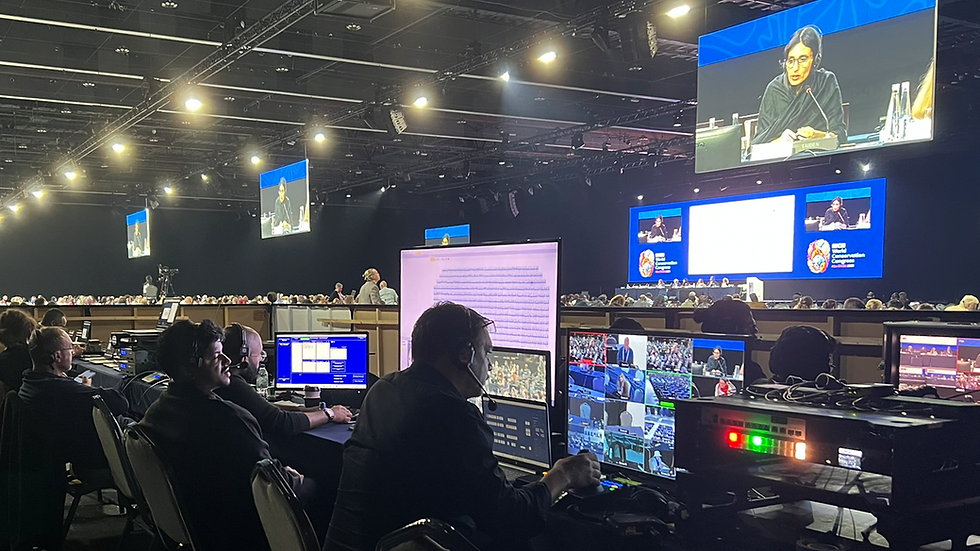
In today’s event landscape, hybrid meetings have become the standard. By combining in-person and remote participation, they extend audience reach and improve accessibility. For multilingual communication, hybrid formats allow interpreters and attendees to connect from anywhere, ensuring interaction across languages and locations.

What Forms Can Remote Interpretation Take?
Traditionally, interpreters had to be onsite. Today, technology makes it possible for them to connect online from anywhere, delivering interpretation worldwide in different ways:
All interpreters remote: no onsite presence required.
Mixed setup: some interpreters remote, others onsite.
Interpreter hub: a centralized facility where interpreters connect without being in the meeting room. These hubs often support multiple venues, improving efficiency and reducing travel.
How Remote Interpretation Works in Hybrid Meetings
Remote interpretation in hybrid meetings can take different forms, with three main models standing out:
Onsite Attendees + Remote Interpreters: Reduces travel costs and gives access to a wider pool of interpreters.
Technology needs: reliable video and audio feeds from the meeting room, strong internet, and a remote platform to deliver interpretation to devices onsite.

Remote Attendees + Onsite Interpreters: Combines the stability of professional onsite systems with remote reach.
Technology needs: conferencing microphones, interpretation consoles, and integration with streaming platforms to ensure clear delivery to remote participants.

Remote Attendees + Remote Interpreters: Cost-effective and flexible but highly dependent on stable internet connections.
Technology needs: cloud-based interpretation platforms, high-quality headsets and cameras, and backup connections to minimize disruptions.

Benefits of Hybrid Multilingual Meetings
Flexibility: supports diverse participation needs.
Scalability: expands reach across locations and time zones.
Cost savings: reduces travel and onsite equipment.
Inclusion: ensures multilingual access for global audiences.
Conclusion: Hybrid as the New Standard
Hybrid meetings are becoming the standard for international communication. By combining physical presence with digital access, they deliver flexibility, scalability, and inclusivity. For organizers, investing in hybrid strategies ensures relevance and accessibility in today’s multilingual world. Success also depends on planning with the right connectivity and equipment