How Technical Teams in Multilingual Events Are Evolving

Event infrastructures now rely on cloud platforms, remote interpretation systems, hybrid models, and AI-supported tools. In this landscape, the responsibility of technical teams remains the same, but the systems they manage have changed.
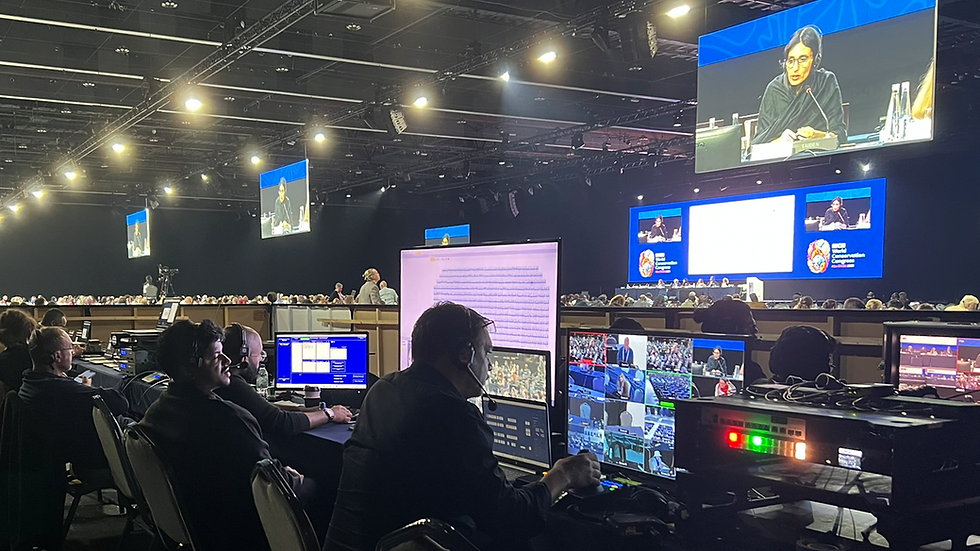
From Dedicated Systems to Integrated Architectures
Multilingual events no longer operate within a single system. They combine on-site and remote participants, interpreters in different locations, and interconnected platforms.
Technical teams now manage:
Cloud-based interpretation and conferencing platforms
Remote interpreters across time zones
AI-supported audio monitoring tools
Hybrid workflows linking onsite and virtual audiences
Platform stability and security
These environments are software-driven and network-dependent. Reliability depends on correct configuration and integration.
The Expanding Skillset of Technical Teams
The goal remains clear: ensure uninterrupted multilingual communication.
What has changed is the expertise required. Today’s professionals must:
Understand system architecture
Manage network performance
Configure secure cloud platforms
Integrate RSI workflows
Troubleshoot across systems
This broader skillset allows teams to support more complex event formats with consistency.
Expertise as a Strategic Requirement
Multilingual events are increasingly interconnected, making technical expertise central to system design and risk management. Reliable communication depends on professionals who understand distributed infrastructures, cloud platforms, and system integration.
As event formats continue to evolve, maintaining stability and clarity requires advanced technical skills.


